













Quigioco Registration Now Italy

In 2026, Quigioco in Italy is evaluated by access, profile, payments, mobile usage, and practical account control.

Fortune Gems 2 Slot

Table of Contents

  • The Dog House Megaways Slot
  • Lucky Joker 10 Extra Gifts Slot
  • Sword of Ares Slot
  • Floating Dragon Hold & Spin Slot
  • Leprechaun Riches Slot
  • Fruit Cocktail Slot
  • The Dog House Megaways Slot
  • Sword of Ares Slot
  • Fruit Million Slot
  • The Dog House Megaways Slot
  • Big Fisherman Slot
  • Big Fisherman Slot
  • Seven Books Unlimited Slot
  • Quigioco Fortune Slot
  • Sword of Ares Slot
  • Floating Dragon Hold & Spin Slot
  • 9 Mad Hats Slot
  • Floating Dragon Hold & Spin Slot
  • Big Bass Splash Slot

After Quigioco Login: What to Watch Immediately

The first entry is not just for logging in. It's to understand if the account makes sense. A platform available in Italy for adult users, in compliance with applicable rules, should allow you to find your balance, personal area, history, payments, and break tools in minutes. If these sections are clear, the session starts in an orderly manner. If, on the other hand, every item seems hidden or not intuitive, the effort comes even before the game.
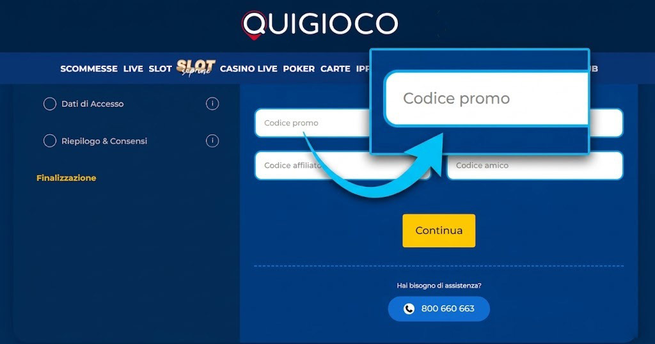
Login 1

Imagine a very common scenario. You have twenty free minutes in the evening, you open your account, and you want to immediately understand if you can use it calmly. At that moment, you don't need noisy graphics or a homepage full of shortcuts. You need a readable structure: a clear profile, easy-to-review transactions, settings that don't seem buried, and a path that doesn't force you to guess every step.

Many users make the simplest mistake right here: they enter, open a random category, and only then look for the functions that really matter. It's better to do the opposite. First the profile, then notifications, then history, then personal limits. Only then does it make sense to decide whether to start a session or close everything and come back later with more attention.

Se Quigioco Login Si Interrompe

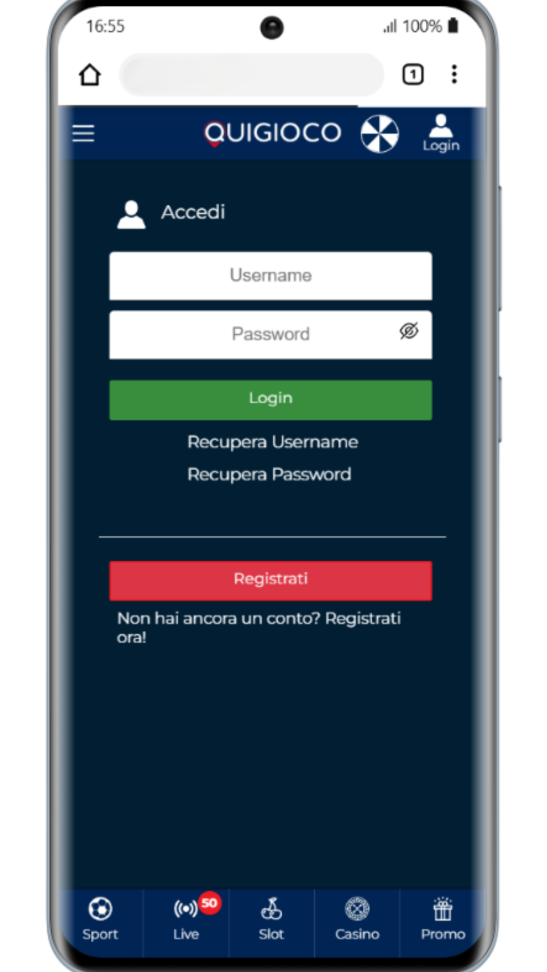
A login interruption doesn't automatically mean there's a serious problem. Sometimes it's just a credential typed in haste, a confirmation left unfinished, or a security step that requires an extra check. The worst thing is to repeat the same action many times without reading what appeared on the screen. It's better to stop, reread the notice, and calmly reconstruct the exact point where the flow got stuck.

Imagine trying to log back in from your phone while also responding to a message. Just a minimal distraction is enough to miss a notice or mistype a detail. The most organized users don't react instinctively. They first understand where the path was interrupted, then try again more calmly.
Quigioco Registration E Il Primo Giorno Di Uso

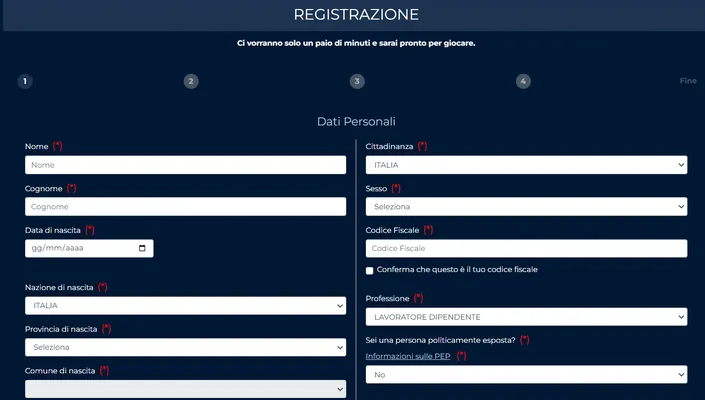
Registration should be brief, but not hasty. Name, contact details, date of birth, credentials, and initial preferences must be consistent from the start. Truly annoying errors rarely arise from complex steps. They arise from small details: an email typed incorrectly, a number no longer in use, a password saved without attention, or a document photographed unclearly.

Login 2

Imagine filling everything out on your phone while doing other things. This is the typical scenario where you leave a field unchecked or save an unclear credential. Nothing happens at the moment. Then, a subsequent check, logging in from your computer, or a profile verification reveals how much weight those hastily made details carry.

For this reason, after creating your account, it's advisable not to jump straight into the catalog. The most attentive players first go to the personal area, check where documents, history, notifications, support, and settings are located. It's a less spectacular, but very practical routine. It especially avoids having to reconstruct everything later, when patience is already lower.

There's also another often overlooked point. The first day isn't just for seeing if it 'works'. It's for verifying if the account remains readable when you're not fully focused. A clear structure with a fresh mind is useful. A clear structure even when you're tired is much more useful.

What to Prepare Before Starting

The best preparation isn't fascinating, but it saves time. A readable document, an active contact method, a correctly registered payment method, and a clear idea of your personal budget: these are the elements that help the most. Imagine wanting to open an account in a few minutes before dinner. If you have to stop to look for a file or check a detail, the rhythm is broken, and the procedure lengthens on its own.

The Small Errors That Later Weigh Heavily

The most frequent errors are almost always minor. An old number, a secondary email you check infrequently, an address detail typed in haste, a credential you distinguish poorly when you need to re-enter it. None of these problems are huge on their own, but together they turn every future step into something slower than necessary.

Imagine two users. The first fills everything out quickly and closes satisfied. The second takes an extra two minutes and double-checks. After a few days, the second finds everything more naturally. The first, however, spends time correcting details that could have been fixed immediately.

Payments, History, and Operational Order

Payments are where theory ends. Until that moment, everything can seem simple: clear menus, a readable profile, an organized environment. But when you need to deposit, check your balance, or review a transaction, the quality of the experience becomes concrete. That's when you realize if the account was set up well or if there are pending details that are now starting to really weigh.

Login 3

The most useful rule is almost always the same: stop for thirty seconds before confirming any operation. Amount, chosen method, account status, and the real reason for the choice. Four quick checks. They seem trivial, but they are precisely the ones skipped when acting in haste or with the idea of changing the session's tone with an automatic gesture.

Imagine a somewhat confused late evening. You still have your phone in hand and feel like making another financial transaction just to extend the session. In that case, the problem isn't the method. It's the moment you're deciding. Stopping for half a minute changes much more than it seems, because it forces you to distinguish a real choice from a reflex.

History, then, is not just a list of numbers. It serves to reconstruct the account's rhythm. It helps you understand what you did, when you did it, and whether your actual behavior is following the initial plan or not. Those who look at it regularly usually know themselves better as users and repeat the same mistakes less often.

To keep things organized, a very practical summary can help:

Area Da Controllare

Cosa Verificare

Why It's Useful

Profile

dati coerenti e recapiti attivi

evita correzioni all'ultimo minuto

Chosen method

intestazione e disponibilità reale

riduce tentativi inutili

History

ultimo movimento registrato

chiarisce lo stato del conto

Documents

file leggibili e completi

facilita i controlli necessari

Personal limits

soglie di spesa e pause

mantiene ordine nella sessione

Uso Da Mobile E Continuità Del Conto

In 2026, many users will use their account more from their phone than from their computer. For this reason, it's not enough for the platform to be available on mobile. It must be truly convenient in the real-world contexts where the phone is used: short breaks, waiting times, commutes, evenings on the sofa, quick checks before going out. In those moments, quality is measured by speed, readability, and clarity of the main functions.

Imagine having ten clear minutes while waiting for someone. You want to see your balance, recent transactions, any notifications, and understand if you really have time for a session. If a few taps are enough to orient yourself, the mobile account works. If, on the other hand, each section requires unnecessary steps, the phone stops being helpful and becomes a source of distraction.

Continuity with the computer also matters a lot. It's not necessary for everything to be identical, but it is necessary for the account to maintain the same logic. Balance, profile, history, support, and payments should be in easily recognizable areas in both cases. Otherwise, the user feels like they are using two different environments, and each access requires starting from scratch.

The most organized users access their account from their phone with a specific purpose, not out of habit. They check the account, decide, act, and then leave. This small difference changes a lot. Mobile is convenient precisely because it shortens time, but if a clear objective is missing, convenience easily turns into distraction.

How to Use Mobile Without Losing Track

When you have little time, it's best to use the account like a dashboard and not a showcase. First balance, then notifications, then history, then decision. If you log in during a short break and already know what to check, time is sufficient. If, however, you start tapping through screens without order, ten minutes can easily become thirty, and the account stops seeming linear.

Imagine opening the application multiple times in the same day out of reflex. You look at the balance, close it, reopen it, tap another section, close it again. In the end, you haven't clarified anything, but you've consumed attention. A simple and repeatable sequence prevents exactly this effect.

Time, Budget, and Session Pace

A platform isn't just evaluated by access and payments. It's also evaluated by how it supports the session's pace. Some people enter for ten minutes, others have an hour free, some just want to check their balance, and others are looking for a more defined gaming moment. These situations require different approaches. When the balance doesn't help distinguish them, the user tends to do everything at once and lose track.

Imagine two opposite scenarios. In the first, you're tired, have little time, and want a light session. In the second, you have more time and want to better follow what you're doing. If you use the platform the same way in both cases, the problem isn't the catalog. It's the absence of a clear framework. More experienced users quickly learn to decide on the available time first and only then the type of experience.

The budget should also be considered very early on, not halfway through the session. Separating a precise amount from other expenses and linking it to a time limit makes everything clearer. It seems like a basic rule, but it's precisely the one that prevents the session from extending on its own. Those who play with a pre-decided limit usually perceive their balance as more organized because they need fewer mid-session corrections.

Knowing when to quit is as important as knowing how to start. Many only think about the entry point. Almost no one seriously considers the exit point. Yet, an organized session almost always ends at the pre-determined time, not when fatigue or nervousness have already taken over choices.

When to Stop Before Pushing It

The signal isn't always financial. Sometimes it comes earlier, in the form of haste, irritation, or the desire to recover immediately. Imagine repeating “just a moment longer” several times within the same fifteen minutes. That's already a sufficient clue. At that point, a short break or a complete stop is worth more than another attempt made out of nervousness. The right moment to stop usually doesn't come when everything is out of control. It comes a bit earlier, when you feel you're already losing clarity.

Support, Limits, and Final Evaluation

Support seems secondary until you really need it. Then, when a move is unclear or a login is interrupted, it becomes central to the experience. The most useful message isn't the longest. It's the most precise. You need to state what you were doing, on which device, in which area of the account, at what time, and with what on-screen alert.

Imagine writing only "it doesn't work." You'll probably have to explain everything from scratch. If, however, you come with the facts in order, the conversation starts much more concretely. The most practical users do just that: they gather the details first and then ask for help. It's a simple habit, but it saves a lot of time.

Alongside support are self-control tools. Spending limits, temporary breaks, self-exclusion, and similar functions should not be seen as a fallback. They are a normal part of adult account use. They help maintain control of the session when gambling risks becoming more automatic than chosen.

Imagine a stressful week where you find yourself opening the account more out of reflex than choice. At that moment, a short break can help much more than another attempt to "do better." The advantage isn't in forbidding, but in restoring clarity. A platform that makes these tools easy to find improves the final judgment much more than a generic promise.

How to Close a Serious Evaluation

In the end, the serious judgment of a platform almost always arises from the same elements: access, profile organization, clarity in payments, mobile quality, presence of pause tools, and support utility. Everything else comes later. Imagine a normal week: a few logins from your phone, an evening session, a check of transactions, a moment when you need to stop. If the account remains readable in all these situations, the overall evaluation rises for practical reasons, not from momentary enthusiasm.

FAQ

The most useful thing is to immediately check the areas you will actually use: balance, profile, history, notifications, payments, and pause tools. If you can find everything effortlessly and without having to guess menus, the account starts off well. It doesn't need to be spectacular. It's more important that it's readable in the first few minutes and in real-life moments of the day.

It's best to have consistent personal data ready, a legible document, active contact details, and a password that is easy for you to remember but not too simple. It doesn't seem like much, but this preparation lightens almost everything that comes after: login, verification, payments, and general account management.

It's worth doing often, not just when a problem arises. The history helps reconstruct amounts, times, and the order of operations, but it also helps understand if the session followed the initial plan or not. For those who log in from mobile at different times during the week, it's a very useful tool for not mixing everything up.

It depends on the task and the moment. The phone is practical for quick checks, notifications, balance, and essential steps, while the computer often helps to read the profile and history more calmly. Neither is always better. It's more important to use the right device for what you really want to do.

The most practical solution is to separate a precise amount from the rest of your expenses and also pair it with a time limit. This way, you control not only your money but also your session duration. A simple and sustainable plan almost always works better than an overly ambitious rule that you abandon at the first bad evening.

Usually, useful signs appear sooner than expected. You start clicking without reading, check your balance too often, extend your time beyond what you decided, or feel the urge to recover immediately. You don't need to wait for a big win. The right time to stop often comes in the form of haste and repetition.

The best way is to be brief but precise. You need to indicate what you were doing, on which device, in which area of your account, at what time, and with what message appeared on the screen. This makes the request much more useful and reduces lost steps. A generic message, on the other hand, often forces you to start over.